If you have ever driven Interstate 25 down from Colorado toward Raton, Cimarron Canyon, and Red River, you have crossed Raton Pass — and in the 1800s, that gateway had a gatekeeper. He was Richens Lacy Wootton, a Virginia-born mountain man known as Uncle Dick, and he built a toll road over the roughest stretch of the Santa Fe Trail and charged every wagon that rolled through. Born on May 6, 1816, in Mecklenburg County, Virginia, Wootton lived one of the great character stories of the southern Rockies.
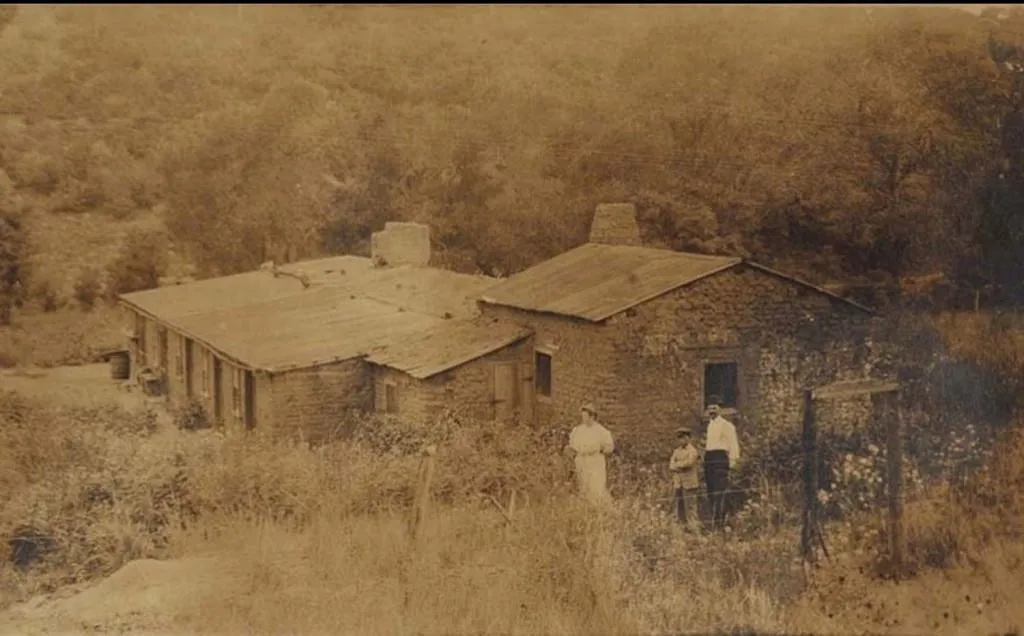
Click to see more photos of Raton Pass — the Wootton house, old trail postcards, and the route Uncle Dick tamed »
Wootton went west at twenty, hiring on in 1836 with a Bent, St. Vrain and Company wagon train bound for Bent's Fort. He stayed as a trapper and trader among the Ute, Cheyenne, Sioux, Arapaho, and Comanche, then worked as a hunter, scout, and freighter. During the Mexican-American War he scouted for Colonel A. W. Doniphan's march into Mexico, and by 1848 his home base was Taos. One much-told story says he earned the name Uncle Dick there, after he treated a celebrating Taos crowd to two free kegs of Taos Lightning whiskey — a nickname that stuck for life.
The pass he tamed was already famous, and not kindly. Raton Pass carried the Mountain Branch of the Santa Fe Trail: longer and harder than the Cimarron Cutoff, but with more water, so traders with light wagons still chose it. Kearny's Army crossed it in 1846, and Colorado Volunteers marched over it in 1862 on their way to victory at Glorieta Pass. Travelers remembered wagons lowered down cliffs by hand, and whole days spent gaining a few hundred yards. Wootton, who had settled near Trinidad and leased land from Lucien B. Maxwell, saw what few others did: the worst road in New Mexico was also an opportunity.
In 1865 he won franchises from the Colorado and New Mexico territorial legislatures, hired Ute workers under Chief Conniach, and built twenty-seven miles of turnpike over the pass. "There were hillsides to cut down, rocks to blast and remove, and bridges to build by the score," he recalled. "I built the road, however, and made it a good one." His toll gate stood in front of his house on the Colorado side, and his August 1, 1865 advertisement in the Territory Gazette set the prices: one dollar for a wagon drawn by two animals, a dollar fifty for four, two dollars for more, twenty-five cents for a man on horseback or on foot, and five cents a head for loose livestock. Native travelers were never charged. Even Wootton's improved road stayed an ordeal: narrow bridges, hairpin curves, grades so steep wagons needed double teams, and a twenty-seven-mile journey that could still take five days.
Daily stage service over the pass began soon after gold was discovered in the Moreno Valley in 1867, so Wootton's road carried miners and supplies toward Elizabethtown — the gold camp whose prospectors soon pushed on into the gulches of Red River itself. The end came by rail: in 1878 the Atchison, Topeka and Santa Fe beat its rival to the pass, its tunnel opened in September 1879, and the toll era was over. Wootton, the story goes, turned down 50,000 dollars for his road and took lifetime rail passes and groceries instead. He died at Trinidad in 1893. Raton Pass is now a National Historic Landmark, and the highway realigned in 1942 follows his old route — so next time you crest the pass toward Red River, tip your hat to Uncle Dick. You are still driving his road.