
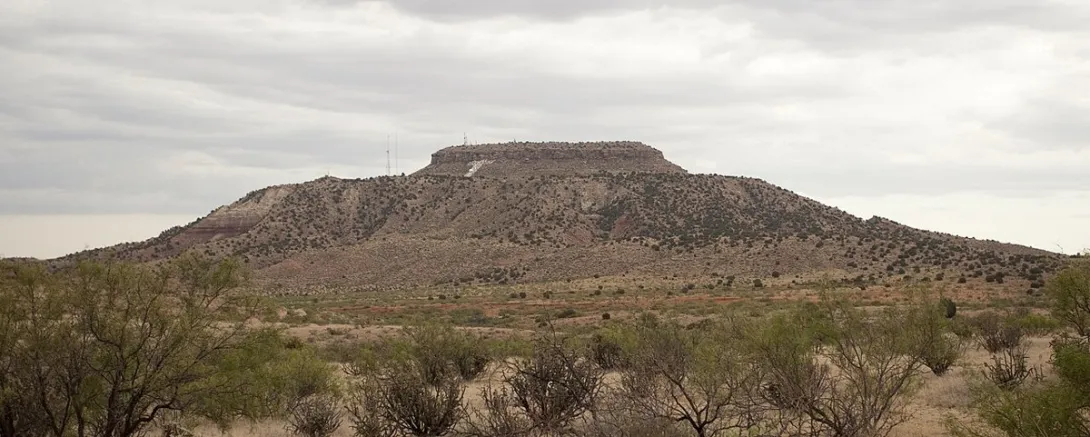
November 17 holds one verified exact anniversary for the Enchanted Circle, and it is a sobering one. On November 17, 1849, a detachment sent out from Taos, guided by Kit Carson, attacked a Jicarilla Apache camp on the Canadian River near Tucumcari Butte at dawn and found that the captive it had ridden so far to rescue, Ann White, had been killed only minutes before.
Red River Town & Main Street
No verified November 17 anniversary survives for Main Street itself, so this section is seasonal context rather than an anniversary. On this date in 1849 there was no town of Red River yet, because the townsite that became Red River City was not laid out until 1895. The valley that November was quiet high country at the head of its canyon, known to hunters, herders, and travelers moving between Taos and the Moreno Valley, and the soldiers in today's lead story passed through that same Taos-centered world on their way east.
Mining & the Gold Rush
This section is also context, clearly labeled, because no verified November 17 mining anniversary survives for the Circle. Gold was not found on Willow Creek and Baldy Mountain until 1866, seventeen years after today's lead item, and Elizabethtown then rose as an early seat of Colfax County while water was brought from the Red River toward the Moreno Valley diggings by the Big Ditch. By mid-November in the boom years, the high camps were settling into winter, when snow slowed the sluices and mills and miners repaired equipment and waited for spring runoff.
Founding Families, Characters & Legends
On November 17, 1849, this is the lead item, told in full. Merchant James White's small party had been attacked near Point of Rocks on the Cimarron Cutoff in late October, and his wife Ann, her young daughter, and a servant were taken captive. Captain William Grier led dragoons and New Mexican volunteers out of Taos, joined at Rayado by Kit Carson, and the trackers reached the attack site on November 9 and followed the trail for about two hundred miles. At dawn on November 17 they attacked the camp on the Canadian River, Grier was wounded, and Ann White was found dead, killed as the troops approached. Her daughter and the servant were never found. Carson, who had first reached Taos in November 1826, later wrote that a faster charge might have saved her.
Skiing & Winter
No verified November 17 ski anniversary belongs to the Circle, so consider this the seasonal story of this week in the year. Winter travel was already the hard fact behind today's lead story, when a rescue party crossed cold, open country in mid-November long before plowed highways or ski lifts. Generations later, the Red River Ski Area opened in December 1959, founded by Stokes and Billie Bolton, and the area has long opened around Thanksgiving. That rhythm still holds, with a planned opening later this month, so mid-November still feels like the held breath just before ski season.
Enchanted Circle Towns & Places
A same-week item belongs here, with its real date stated plainly. On November 16, 1875, one day before today's date, a gunfight broke out in the Cimarron country between Jicarilla Apaches and Indian agent Alexander G. Irvine while he was distributing meat to them and they complained that it was rotten. It was one more violent hour in the Colfax County War years, when Cimarron and the Maxwell Land Grant settlements argued over land, beef, and authority. Taos was also the dispatch point for the 1849 rescue in today's lead story, which is why so many Circle stories begin or end in Taos.
The Land, Weather & Wildlife
For this category we offer verified context from the Eagle Nest country, east around the Circle, rather than an exact anniversary. The National Register nomination for Eagle Nest Dam records that, beginning in late 1916, about one hundred fifty men worked on the project that would impound the Cimarron River, and that severe winter freezes later slowed the concrete work. November was therefore a working month at the head of Cimarron Canyon, much as it had been a traveling month on the Canadian River in 1849. The finished dam created Eagle Nest Lake, named for eagles that nested in the area.
Roads, Stage Lines & Travel
Today's lead story is also a road story, told here from the traveler's side. James White was traveling west with a wagon train led by the well-known wagon master Francois Xavier Aubry when his small party went ahead in carriages and was attacked near Point of Rocks, a landmark on the Cimarron Cutoff of the Santa Fe Trail east of Rayado. That cutoff saved distance but crossed dry, exposed country with little water and little protection. The rescue that ended on November 17, 1849, began because word of the attack reached the Army near Taos, and it remains one of the clearest reminders of how dangerous the road into New Mexico could be in late autumn.
Living History & Heritage
The memory of the man at the center of today's story is kept in a house you can still walk through. In 1952, the Masonic Lodge of Taos, which had inherited Kit Carson's adobe home, restored it and opened it as the Kit Carson Home and Museum, preserving the rooms where Carson and his wife Josefa lived and where he later kept his office as an Indian agent. It is living heritage in the plainest sense, because visitors stand in a real Taos household rather than a replica. Red River's own museum and preserved cabins carry the same work forward at the northern end of the Circle.
So November 17 is a day for remembering how hard the road once was, and how much of that past is still standing. A dawn attack on the Canadian River in 1849, a gunfight near Cimarron in 1875, dam builders facing winter in 1916, and a ski town waiting for opening day all belong to the same high country, and the valley you walk today is one that travelers have crossed in November for over a century and a half.