
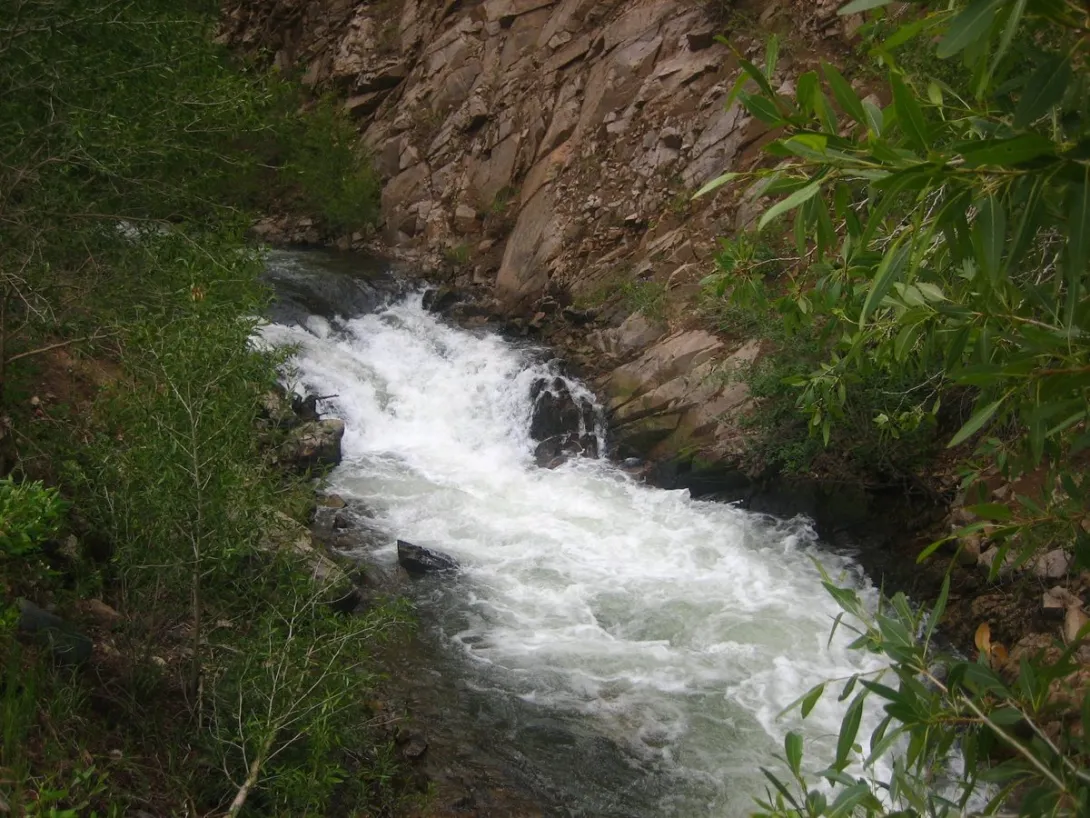
Drive south from Red River toward Questa in late spring and you will see it at once: green fields laid out in a dry mountain valley, and beside them the narrow lines of water that make the green possible. Those lines are acequias, community irrigation ditches that carry snowmelt and river water by gravity to orchards, gardens, hay fields, and pastures. In the Red River valley they are not museum pieces. They are living history, still cleaned, still governed, and still shared by the families who depend on them.
Click to see more photos of acequias in New Mexico — the Potrero Ditch at Chimayo, the Acequia Madre in Santa Fe, and the La Canova Acequia
The roots of the system run deep. Pueblo peoples in New Mexico were using canals and ditches to irrigate their crops by the year 1400, and Spanish settlers who arrived in the 17th century brought their own irrigation knowledge, shaped by Spanish and Moorish practice, and a written system of water governance. The word acequia itself comes from Arabic, meaning a water conduit. Over time the two traditions joined into the community ditch culture that still defines northern New Mexico, where around 700 acequias continue to function today.
Questa, founded in 1842 as San Antonio del Rio Colorado, was built around that need for shared water. Early in the 1900s its farming families acted to protect it. On February 13, 1902, five Questa men, Melquiades Rael, Benito Luis Ortiz, Eulogio Rael, Francisco Borja Rael, and Jose Maria Cisneros, incorporated the Cabresto Lake Irrigation Corporation to build a better water system for the town. The dam at Cabresto Lake was approved on April 10, 1908, and completed in January 1910, and on November 23, 1910, five ditches in the system were approved. The whole undertaking cost 15,000 dollars, and the association carried a water right with a priority date of 1815, among the oldest in the valley.
What makes an acequia endure is not only the ditch, but the way neighbors run it together. Each acequia is governed by elected commissioners and a mayordomo, the ditch boss who controls the water during the season and works with every parciante, or water-rights holder, along the line. In 1907 New Mexico law made each acequia a political subdivision of the state. In 1974 the Cabresto Creek and Red River adjudication began for the local ditches, covering the Cabresto Lake Irrigation Association, the Llano Community Ditch, the Questa Citizens Ditch Association and its community ditches drawing from the Red River, the acequias drawing from West Latir Creek, and the Acequia Madre del Rito de La Lama.
Every spring the work begins again with the limpia, the annual cleaning, when parciantes turn out with shovels to clear silt, brush, and debris before the water is let in. It is hard, ordinary work, and that is the point. Local people in Taos County describe the feeling behind it with one word, querencia, the love of land, the love of heritage, and the love of place. Next time you pass those green fields below Red River, look for the ditch running beside them. Someone in the community cleaned it, governed it, and shared its water this year, just as their grandparents did.